Bunbury sits on the Swan Coastal Plain, where the water table can rise within a meter of the surface after heavy winter rains. We have run Atterberg limits on hundreds of samples from the Collie siltstone and the deep alluvial clays that underlie much of the city’s industrial zone along the Leschenault Estuary. Knowing the plasticity index is the first step before we recommend a foundation type — a PI above 35 tells us we are dealing with highly expansive clay that will shrink and swell with seasonal moisture changes. That is why every soil classification in Bunbury should start with a proper liquid and plastic limit determination, especially when the project involves shallow footings or road subgrades near the coast.
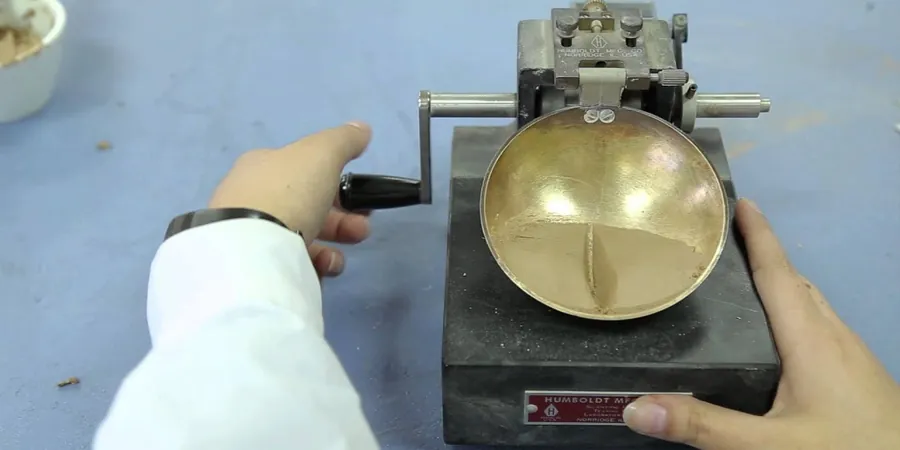
A PI above 35 in Bunbury’s coastal clays almost always signals high shrink-swell potential that must be addressed before slab design.
Approach and scope
Site-specific factors
The contrast between the sandy soils of Withers and the heavy clays of Carey Park is dramatic. In one bore we may have clean sand with a PI near zero; two blocks away the auger brings up stiff clay with a PI of 42. That variability is the main risk when designing foundations in Bunbury without site-specific Atterberg limits. If the engineer assumes a low-plasticity material and pours a waffle slab on high-PI clay, differential movement is almost guaranteed within the first two years. We have seen it happen on Glen Iris projects where the moisture regime shifted after landscaping. The only way to catch that risk is to run the limits on every distinct soil stratum encountered during the investigation.
Regulatory framework
AS 1289.3.2.1 (Cone penetrometer method), AS 1289.3.2.2 (One-point liquid limit method), AS 1289.3.3 (Plastic limit determination), AS 1289.3.1.1
Related technical services
Standard Atterberg Limits (LL, PL, PI, LS)
Full suite run on undisturbed or remoulded samples from test pits or boreholes. Includes liquid limit by Casagrande cup, plastic limit, plasticity index and linear shrinkage. Results reported within 5 working days with NATA endorsement.
Rapid Screening (LL & PL only)
Expedited service for classification during the investigation phase. We run a one-point liquid limit and plastic limit to get the PI quickly. Ideal for multiple boreholes where you need a first-pass assessment before deciding on additional lab work.
Typical parameters
Top questions
Why do Atterberg limits matter for Bunbury residential slabs?
Bunbury's clay soils can have a plasticity index above 35, which makes them highly reactive to moisture changes. The AS 2870 residential slab standard uses the PI and linear shrinkage to classify the site as Class M, H1, H2 or E. Without those numbers the slab design is a guess.
How much does Atterberg limits testing cost in Bunbury?
The standard full suite (LL, PL, PI, LS) ranges between AU$100 and AU$180 per sample, depending on volume and whether the sample requires drying or preparation. The rapid screening option is around AU$80 per sample.
Can you run Atterberg limits on samples from deep bores below the water table?
Yes, as long as the material is fine-grained. We air-dry the sample first to get a consistent moisture baseline. The presence of groundwater does not affect the test because we control the moisture content during the procedure.
What sample condition is required for reliable results?
We need at least 500 g of dry soil passing the 425-micron sieve. The sample should be representative of the stratum — no gravel, no organic debris. If the material contains visible roots or shells the results will not reflect the natural soil behaviour.