We recently worked on a project where a new warehouse on Spencer Street was built over a former sand quarry. The fill depth varied from two to six metres across the site. That is common in Bunbury. Much of the central area sits on reclaimed wetlands or old quarry backfill. Without proper foundations on fill analysis, those differential settlements crack slabs and jam doors within months. We start with a detailed site history review. Then we drill boreholes to map fill thickness and composition. We also run plate load testing to measure bearing capacity directly on the fill layer. That gives us real numbers, not estimates. The goal is simple: design a foundation that works with the fill, not against it.
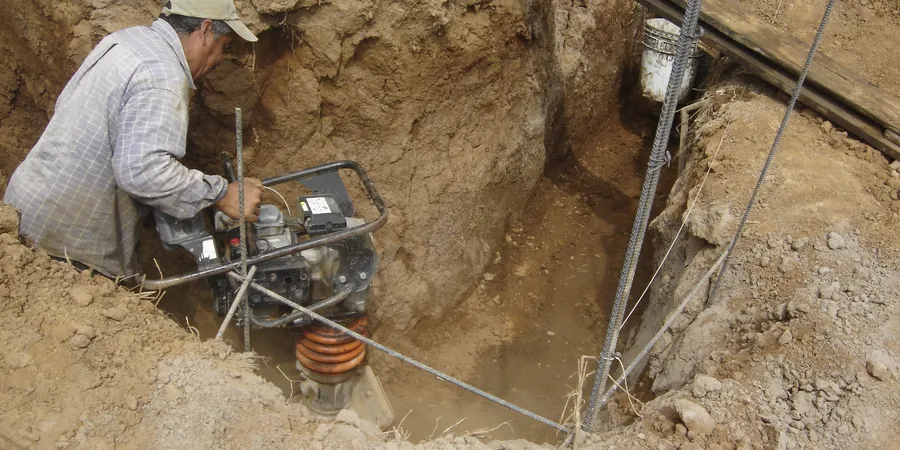
Uncontrolled fills from the 1970s behave differently than modern engineered fills. Groundwater sits high, typically one to three metres down.
Approach and scope
Site-specific factors
In Bunbury, we often see builders assume fill is uniform across a site. It rarely is. A two-metre deep fill on one side can jump to five metres in the middle of the lot. That difference causes differential settlement that cracks brickwork and breaks underground pipes. Another common issue is fill placed over soft estuarine clays left from old wetlands. The fill might be fine, but the clay below consolidates under load and drags the foundation down. That is why foundations on fill analysis must look at both the fill and the natural ground beneath. Ignoring that double risk leads to expensive remedial work later.
Service video
Regulatory framework
AS 1726 – Geotechnical Site Investigations, AS 4678 – Earth Retaining Structures, AS/NZS 1170 – Structural Design Actions
Related technical services
Fill Characterisation & Bearing Assessment
Boreholes, SPT, and plate load tests to determine fill type, compaction, and safe bearing capacity. Includes laboratory testing for moisture content and density.
Improvement Recommendation
Based on the analysis we recommend solutions like dynamic compaction, stone columns, or deep foundations. We specify the method that fits the fill conditions and project budget.
Typical parameters
Top questions
How deep do you need to drill for foundations on fill analysis in Bunbury?
We typically drill to at least twice the width of the proposed footing or until we reach natural ground below the fill. For a standard house slab that means boreholes around 4 to 8 metres deep. We adjust depth based on fill thickness found during drilling.
What is the typical cost range for a foundations on fill analysis in Bunbury?
For a standard residential lot the analysis ranges between AU$1,150 and AU$3,640 depending on fill depth, number of boreholes, and laboratory tests required. Commercial sites with deeper or thicker fills fall at the higher end.
Can I build directly on uncontrolled fill if I compact it more?
Sometimes yes, but it depends on fill depth and composition. Shallow uncontrolled fills less than 2 metres deep can often be recompacted and tested. Deeper fills or fills with buried organics usually require Improvement or deep foundations. We run plate load tests after recom- paction to confirm bearing capacity.