The sandy soils of the Swan Coastal Plain, extending into the Bunbury region, typically present a shallow water table within 2 to 5 metres of the surface, a condition that demands rigorous assessment for any waste containment facility. When designing a landfill cell in this setting, understanding the hydraulic conductivity of the underlying strata becomes non-negotiable, as the risk of leachate migration into the unconfined aquifer is real. Our approach to landfill geotechnics begins with in-situ permeability testing using constant-head and falling-head methods, complemented by a clasificación de suelos to identify clay lenses that might serve as natural barriers. We then correlate these findings with the hydrogeological model to confirm whether the site achieves the minimum 1-metre separation to the seasonal high water table required by Western Australian guidelines.
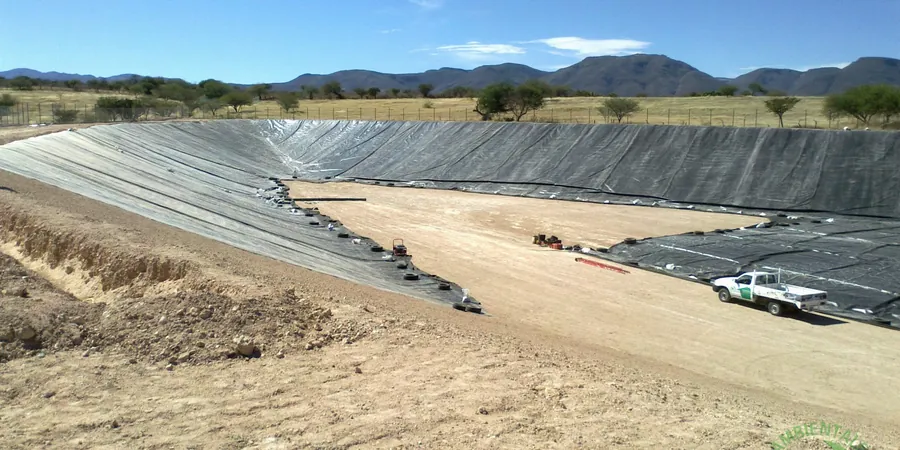
Landfill geotechnics in Bunbury must account for a shallow water table and seasonal rainfall that can double the leachate head within the cell.
Approach and scope
- Hydraulic conductivity (k) of the liner system: target ≤ 1×10⁻⁹ m/s for compacted clay liners
- Shear strength parameters (c', φ') for waste slope stability analysis under AS 4678
- Settlement potential of the foundation under fill loads up to 30 metres high
- Gas generation potential and methane migration pathways through the unsaturated zone
Site-specific factors
In the eastern suburbs of Bunbury, around the Leschenault Estuary, the soils tend to be finer-grained estuarine deposits with lower permeability, which reduces the short-term leachate migration risk but increases the potential for differential settlement under the waste mass. Conversely, in the western industrial precinct near the port, the dune sands drain freely but lack the natural clay barrier, meaning the engineered liner becomes the sole line of defence. Our landfill geotechnics assessment quantifies both scenarios using settlement plates and inclinometers, so the operator knows exactly where the weak zones are before the first waste layer is placed. The difference between a well-characterised site and one that relies on assumptions can be the difference between a compliant facility and a long-term remediation liability.
Service video
Regulatory framework
AS 1726:2017 — Geotechnical site investigations, AS 4678:2002 — Earth-retaining structures (applied to containment berms), AS/NZS 1170.2:2011 — Wind actions (for capping layer design)
Related technical services
Site Investigation & Permeability Testing
Drilling of boreholes to 20 m depth, installation of standpipe and vibrating-wire piezometers, and in-situ falling-head tests to determine hydraulic conductivity of each stratum. Includes laboratory verification on undisturbed samples.
Slope Stability & Liner Design
Two-dimensional limit-equilibrium analysis of waste slopes and containment berms using Spencer's method, with sensitivity checks on pore pressure and seismic loading. Optimisation of liner thickness and drainage layer geometry.
Construction QA & Settlement Monitoring
On-site supervision of liner placement, compaction testing with nuclear density gauge, and long-term settlement monitoring using survey prisms and settlement plates. Reports issued in compliance with AS 1726.
Typical parameters
Top questions
What makes landfill geotechnics different from a standard site investigation?
Landfill geotechnics focuses on long-term containment rather than short-term bearing capacity. We measure hydraulic conductivity at very low gradients, assess gas migration pathways, and evaluate the stability of waste slopes that may be 30 metres high — none of which are routine in a standard residential investigation.
How deep do boreholes need to be for a landfill cell in Bunbury?
Typically 10 to 20 metres below the base of the cell, or until a continuous clay layer of at least 3 metres thickness is encountered. The depth is driven by the need to confirm there is no preferential pathway to the underlying aquifer, especially given the shallow water table in the Bunbury area.
What is the typical cost range for a landfill geotechnics study in Bunbury?
A complete study covering site investigation, laboratory testing, slope stability analysis, and reporting generally falls between AU$3,580 and AU$11,540, depending on the number of boreholes, the depth of drilling, and the complexity of the liner design. Always request a scope-specific quote.
Can a landfill cell be built on the sandy soils near the Bunbury port?
Yes, but it requires a fully engineered composite liner — typically a geomembrane over a compacted clay layer — because the native dune sands have no natural low-permeability barrier. The foundation must also be treated to prevent differential settlement under the waste load.
How does seasonal rainfall affect the stability of waste slopes?
Winter rainfall in Bunbury can raise the phreatic surface inside the waste mass, increasing pore pressures and reducing effective stress. Our stability analyses model a worst-case scenario with pore pressure ratios of 0.3 to 0.5, and we recommend installing horizontal drainage layers to keep the leachate head below 0.3 metres.