Bunbury sits on the Swan Coastal Plain, where the water table can rise to within 1.5 metres of the surface during winter. That shallow groundwater makes exploratory test pits a practical first step before any foundation design. We dig test pits to expose the soil profile directly, check for groundwater seepage, and collect undisturbed samples. For deeper investigation we often pair this with a georadar survey to map buried obstructions or old river channels that might affect excavation safety.
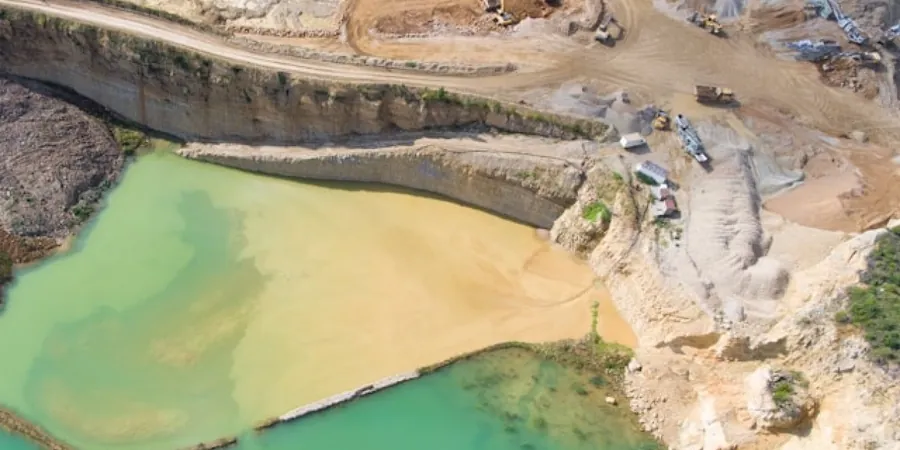
A 3-metre test pit in Bunbury's dune sand reveals more about bearing capacity than a dozen laboratory guesses.
Approach and scope
- Soil colour, texture, and moisture content per AS 1726
- Depth to water table and seepage rate
- Presence of organic material or root zones
- Compactness using a pocket penetrometer on exposed faces
Site-specific factors
A common mistake we see on Bunbury sites is assuming the sandy topsoil is uniform. Builders dig a single test pit near the street, find clean sand, and call it good. But three metres back the profile changes to silty clay from an old wetland fill. That difference can cause differential settlement under a slab. We always recommend at least two test pits per block, spaced to cover both the high and low elevation areas.
Regulatory framework
AS 1726-2017 Geotechnical site investigations, AS 4678-2002 Earth retaining structures, AS/NZS 1170.0-2002 Structural design actions
Related technical services
Bulk Sample Collection for Laboratory Testing
We retrieve 20 kg bag samples from each soil layer exposed in the pit, sealed and labelled for moisture content, Atterberg limits, and particle size distribution. This data feeds directly into your foundation design parameters.
In-Situ Density Testing via Sand Replacement
After logging the pit, we perform a sand replacement test on the natural ground surface to confirm compaction levels. This is particularly useful when the test pit is dug in a prepared subgrade for a slab or road base.
Typical parameters
Top questions
How deep can an exploratory test pit go in Bunbury's sandy soils?
In loose dune sand we can dig to 3 metres without shoring, but once we hit the water table the walls collapse. With trench boxes or benching we reach 4.5 metres in the Tamala Limestone areas. The depth is always limited by safety and the groundwater level on the day.
What is the typical cost for an exploratory test pit in Bunbury?
A single test pit with logging, sampling, and backfill ranges from AU$790 to AU$1,400 depending on depth and access. If the site requires shoring or dewatering the price moves toward the upper end. Volume discounts apply for multiple pits on the same site.
Do you need a permit to dig test pits within the City of Bunbury?
Yes, if the pit is deeper than 1.5 metres or located near a public footpath you need a small works permit from the City of Bunbury. We handle the paperwork as part of our service and notify Dial Before You Dig for underground utilities before any excavation starts.