Road geotechnics in Bunbury forms the critical foundation upon which all transport infrastructure is conceived, designed, and maintained. This specialised discipline addresses the interaction between pavement structures and the underlying earth, encompassing everything from subgrade evaluation and earthworks to drainage and pavement composition. In a regional centre like Bunbury, where the road network supports both heavy freight movements from the port and growing residential connectivity, the performance of these geotechnical systems directly influences safety, longevity, and economic efficiency. Without rigorous geotechnical input, roads are susceptible to premature failure through rutting, cracking, and moisture-induced weakening, leading to costly reactive maintenance. Our local expertise ensures that every project, whether a highway upgrade or a suburban cul-de-sac, is grounded in a thorough understanding of the ground conditions that will govern its service life.
Bunbury's geological setting presents a distinctive set of conditions that demand careful geotechnical consideration. The region sits on the Swan Coastal Plain, characterised by extensive deposits of Bassendean Sand and Guildford Formation clays, overlaid in many areas by lateritic duricrusts of variable thickness and strength. The Bassendean Sand, while providing excellent drainage, can be loose and prone to collapse settlement when loaded or saturated. The Guildford Formation clays, conversely, are highly reactive, exhibiting significant shrink-swell behaviour with seasonal moisture changes that can wreak havoc on rigid pavements and lightly bound flexible layers. This juxtaposition of granular and cohesive soils within a single project footprint is common, requiring a nuanced approach to earthworks specification and pavement foundation design. Understanding this local geology is not an academic exercise; it is the first step in mitigating the risk of differential settlement and shear failure beneath our roads.
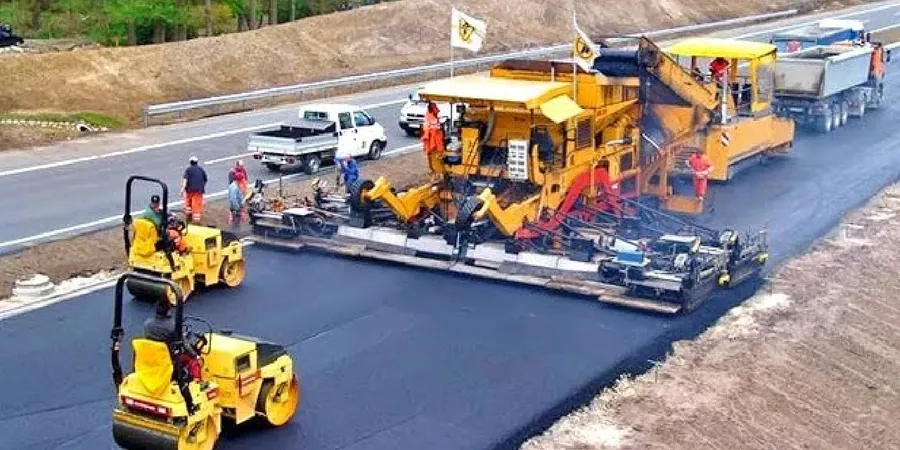
All road geotechnical works in Bunbury are governed by a framework of Australian standards and state-specific guidelines that ensure technical rigour and consistency. The overarching document for pavement design is the Austroads Guide to Pavement Technology, particularly Part 2: Pavement Structural Design and Part 4: Pavement Materials. These are complemented by Main Roads Western Australia (MRWA) specifications and technical notes, which often impose more stringent requirements tailored to local materials and climate. For instance, MRWA Specification 501 for earthworks and Specification 302 for unbound granular pavements are the primary references for any state-funded project. A fundamental requirement is the California Bearing Ratio (CBR study for road design), which remains the empirical cornerstone for determining subgrade strength and the required pavement thickness. Adherence to these documents is not optional; it is a contractual and technical necessity for achieving design life targets and obtaining engineering sign-off.
The application of road geotechnics spans the entire lifecycle of transport assets, from greenfield developments to the rehabilitation of ageing arterials. For new residential subdivisions, a detailed road subgrade design is essential to establish a stable platform, often involving lime stabilisation of reactive clays or compaction of sandy fills to a specified density. On major freight routes, such as those servicing the Bunbury Port, flexible pavement design must account for heavy axle loads and the high tyre pressures that can induce shear failure in granular layers over a weak subgrade. Industrial access roads may benefit from rigid pavement design where high point loads, chemical spills, or long-term maintenance access dictate a concrete solution. Furthermore, for any existing network, an existing pavement evaluation using falling weight deflectometer testing is the key to diagnosing structural weaknesses and planning cost-effective overlays or full-depth reconstructions. Each project type demands a distinct geotechnical response, unified by the common goal of structural adequacy.
Quick answers
What are the main geotechnical risks for roads in the Bunbury region?
The primary risks stem from the local geology. Reactive Guildford Formation clays cause volume change with moisture fluctuations, leading to pavement cracking and unevenness. Loose Bassendean Sands risk collapse settlement under load or saturation. Inadequate drainage can compound these issues, creating perched water tables that soften the subgrade and drastically reduce its bearing capacity, leading to structural failure.
When is a geotechnical investigation mandatory for a road project in Western Australia?
A geotechnical investigation is mandatory for virtually all public road projects under Main Roads WA jurisdiction, as per their technical specifications. For private developments, it is a standard condition of subdivision approval to ensure the road asset can be handed over to local government. The scope is defined by Austroads guidelines and must quantify subgrade strength, identify problematic soils, and inform the pavement design.
How does road geotechnics influence the choice between a flexible and a rigid pavement?
The subgrade's strength and stiffness are decisive factors. A strong, uniform subgrade with a high CBR value may economically support a flexible pavement. Conversely, a weak, reactive, or variable subgrade often favours a rigid concrete pavement, which can bridge lower support conditions through its flexural strength, reducing the risk of differential settlement and the need for extensive ground treatment.
What role does drainage play in the long-term performance of a road pavement?
Drainage is arguably the single most critical factor for pavement longevity. Effective geotechnical road drainage intercepts surface run-off and sub-surface seepage, preventing water from saturating the subgrade and unbound granular layers. Saturation causes rapid strength loss, pore pressure build-up, and erosion of fine particles. A well-designed drainage system preserves the design stiffness of the entire pavement foundation, preventing premature distress.