We run the bearing capacity analysis on site with our track-mounted hydraulic rig, capable of delivering 120 kN reaction through screw anchors grouted into the dolerite cap that underlies much of central Bunbury. The rig carries a full set of calibrated proving rings and dial gauges, so we can perform plate load tests up to 600 mm diameter while logging load-settlement curves in real time. For shallow foundations in the sandy coastal strip between the Leschenault Estuary and the Indian Ocean, we often pair this work with a plate load test to verify the assumed modulus of subgrade reaction before the footing contractor pours. Every test follows AS 1726-2017 procedures, and we record each reading against the standard settlement criteria of 25 mm or 0.1D, whichever governs first.
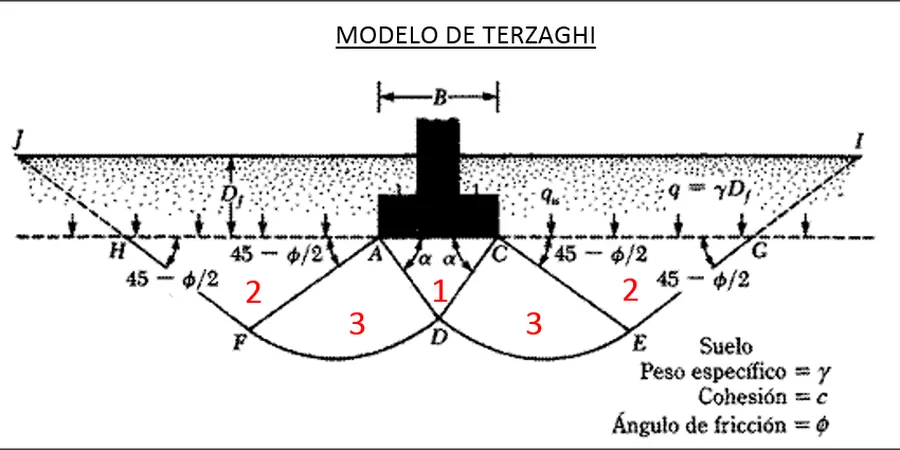
The dolerite cap across central Bunbury can show refusal at 2 metres, yet 50 metres away the sand column is 15 metres deep.
Approach and scope
Site-specific factors
We see it time and again in Bunbury: a builder assumes the dolerite cap is continuous, starts excavation, and hits 6 metres of soft estuarine clay instead. The bearing capacity analysis in Bunbury needs to account for the paleochannels that cut through the basalt — they are filled with compressible clays and peat layers that can yield less than 50 kPa. If you skip a proper investigation, you risk differential settlements that crack masonry veneers and jam sliding doors within the first year. Our approach always includes a desk study of historical boreholes from the Main Roads WA database before we mobilise, so we know where those channels are likely to be.
Regulatory framework
AS 1726-2017 Geotechnical site investigations, AS 4678-2002 Earth retaining structures, AS/NZS 1170.0-2002 Structural design actions, AS 1289 Plate load test standard
Related technical services
Plate load testing
Reaction-anchored plate tests up to 600 mm diameter on sand, clay, and dolerite. Load increments follow AS 1726 with settlement held to 0.02 mm/min before next stage.
SPT correlation analysis
Bearing capacity derived from corrected SPT N-values using Terzaghi and Meyerhof formulations. We apply the overburden correction factor CN for deep sand profiles.
CPT-based bearing assessment
Cone penetration testing with pore pressure measurement gives continuous profiles of tip resistance and sleeve friction for bearing capacity in stratified soils.
Foundation settlement check
Elastic and consolidation settlement estimates using oedometer data from undisturbed samples. We compare against the project's serviceability limit of 25 mm total.
This service complements our laboratory testing work for a complete project analysis.
Typical parameters
Top questions
What is the typical bearing capacity of the dolerite cap in central Bunbury?
We consistently measure allowable bearing capacities between 400 kPa and 800 kPa on the Bunbury Basalt dolerite, depending on the degree of weathering. Fresh dolerite can exceed 1000 kPa, but the weathered zone near the surface usually governs the design.
How much does a bearing capacity analysis in Bunbury cost?
For a standard residential site with two plate load tests and a borehole, the cost typically ranges between AU$850 and AU$2,260. Larger commercial projects with multiple test locations and CPT soundings fall at the upper end of that range.
Can I rely on published bearing capacity tables for Bunbury's coastal sands?
Published tables give a starting point, but the sand density varies enormously within a single lot due to the paleochannel network. We always recommend site-specific testing because a 150 kPa assumption can be 50 kPa too high or 200 kPa too low depending on the precise location.