Under the National Environment Protection (Assessment of Site Contamination) Measure 2013 (NEPM 2013) and the WA Contaminated Sites Act 2003, any development in Bunbury on former industrial land, rail yards, or agricultural blocks must address soil contamination. The city sits on Quaternary alluvial sands and estuarine clays along the Leschenault Estuary, meaning groundwater is shallow and contaminants move fast. We have managed remediation projects from the port precinct to the Eaton industrial estate, and the first step is always a detailed site history and a density cone sand replacement test to verify compaction after soil removal. Follow-up validation sampling and laboratory analysis complete the cycle.
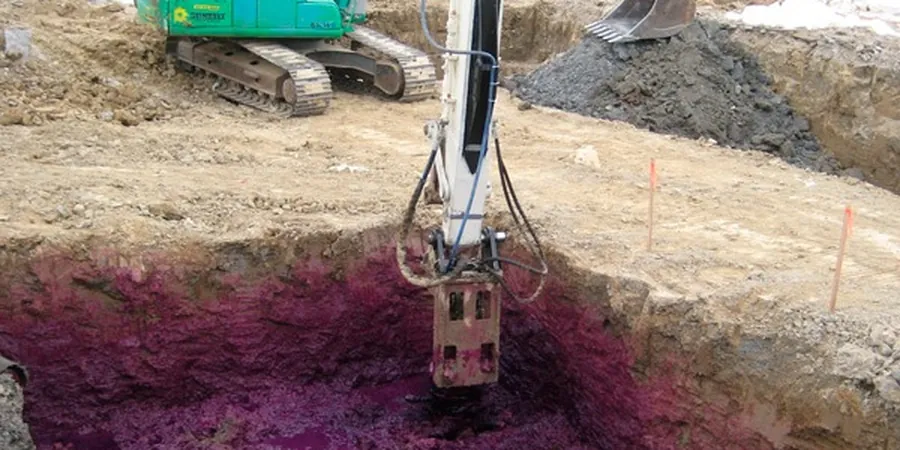
Shallow groundwater in Bunbury's sandy soils means contamination can spread laterally over 50 metres in less than a week.
Approach and scope
- Total petroleum hydrocarbons (TPH) and BTEX
- Heavy metals (arsenic, lead, chromium, nickel)
- pH and electrical conductivity
- Acid sulfate soil assessment (SPOCAS method)
Site-specific factors
Bunbury receives about 750 mm of rain per year, mostly between May and October. That seasonal recharge drives water tables up within 1.5 metres of the surface in the Carey Park and Withers suburbs. During wet months, contaminated plumes migrate into drains and the Leschenault Estuary, which is a Ramsar-listed wetland. If a remediation plan ignores the seasonal groundwater fluctuation, the risk of off-site migration increases sharply. We always install temporary standpipe piezometers to monitor water levels during the remediation period, and we adjust the excavation depth based on daily readings.
Regulatory framework
NEPM 2013 (Schedule B1-B4), WA Contaminated Sites Act 2003, AS 4482.1 Guide to the investigation and sampling of potentially contaminated soil, USEPA Method 8260 Volatile organic compounds
Related technical services
Site History & Preliminary Screening
Review of historical aerial photos, council records, and land-use registers to identify potential contamination sources before field work begins.
Intrusive Soil Sampling & Laboratory Analysis
Drilling or hand-augering at targeted locations, followed by NATA-accredited laboratory testing for TPH, BTEX, heavy metals, and acid sulfate soils.
Remediation Planning & Excavation Supervision
Design of excavation limits, stockpile management, and backfill specifications. We supervise the removal of contaminated material to licensed facilities.
Validation Sampling & Regulatory Reporting
Post-remediation sampling to confirm clean-up goals are met, preparation of Site Audit Reports for submission to the WA Department of Water and Environmental Regulation.
Typical parameters
Top questions
What does contaminated soil remediation cost in Bunbury?
For a typical residential block with hydrocarbon contamination, expect a range between AU$5,170 and AU$22,330 depending on the volume of soil removed, disposal fees, and laboratory analysis. Industrial sites with deeper contamination or acid sulfate soils can exceed that range.
How long does the remediation process usually take in Bunbury?
A straightforward excavation and backfill on a standard 700 m² block can be completed in 2 to 4 weeks, including validation. Larger commercial sites with groundwater treatment or bioremediation may take 3 to 6 months.
Do I need a Site Audit Report for a Bunbury property?
Yes, if the contamination is listed on the WA Contaminated Sites Register or if the property is being rezoned from industrial to residential. A certified environmental auditor must sign off before development approval.
Can I reuse the treated soil on the same site?
Only if the laboratory results show contaminant concentrations below the health and ecological screening levels defined in NEPM 2013. We issue a certificate of analysis for each batch that meets the criteria.