Bunbury sits on the Swan Coastal Plain with water tables often less than 3 metres deep, so any excavation below that level demands careful geotechnical excavation monitoring. Shallow groundwater combined with sandy soils from the Leschenault Estuary means that without proper control, a simple trench can turn into a collapse hazard within hours. Our team installs piezometers and settlement markers before the first bucket breaks ground, tracking pore pressure and lateral movement continuously. For deeper cuts we pair this with a stability analysis of slopes to assess any risk from the sandy layers, and we also run field vane tests to check undrained shear strength in the clay lenses that appear near the estuary. It is a methodical process that keeps the site safe and the project on schedule.
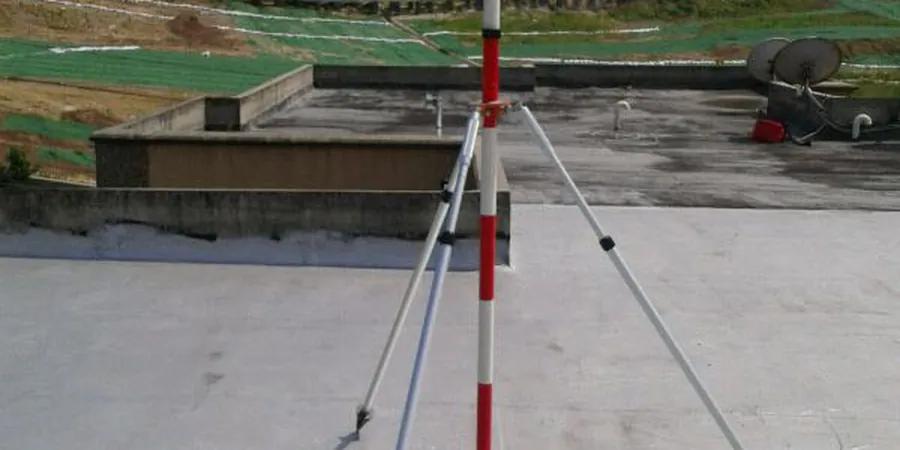
Continuous pore pressure monitoring in Bunbury's shallow water table can prevent up to 80% of excavation-related incidents before they escalate.
Approach and scope
- Automated total stations record X, Y, Z displacements every 15 minutes.
- Piezometers measure pore pressure variations in real time.
- Manual checkpoints provide redundancy for critical zones.
Site-specific factors
The primary risk in Bunbury excavations is the combination of a shallow water table and loose sands from the Guildford Formation. During winter the water table rises to within 1 metre of the surface, creating quick conditions in silty sands. If the monitoring system detects a sudden rise in pore pressure or a lateral movement of more than 5 mm per hour, the excavation must be backfilled or shored immediately. We have seen cases where a 3-metre-deep pit in the centre of Bunbury flooded within 20 minutes due to a burst water main that went undetected because the monitoring was not continuous. That is why every one of our geotechnical excavation monitoring plans includes redundant piezometers and a direct communication line to the site supervisor.
Service video
This service complements our laboratory testing work for a complete project analysis.
Regulatory framework
AS 1726:2017 Geotechnical site investigations, AS 4678:2002 Earth-retaining structures, AS/NZS 1170.0:2002 Structural design actions, FHWA-NHI-09-112 (instrumentation guidelines)
Related technical services
Real-time Piezometer Installation
Vibrating-wire piezometers installed at depths of 2 to 10 m, with automatic data logging and web-based interface for remote access.
Inclinometer Casing and Surveys
Vertical inclinometer casings grouted into boreholes for measuring lateral deflection of retaining walls or sheet piles during excavation.
Settlement Monitoring Arrays
Optical survey points and hydrostatic settlement gauges placed around the excavation perimeter to track vertical movement.
Automated Alert System
Cloud-based platform that sends SMS and email alerts when instrument readings exceed pre-set thresholds, with a 2-minute response time.
Typical parameters
Top questions
What is the typical cost range for geotechnical excavation monitoring in Bunbury?
For a standard 5-metre-deep excavation with 4 monitoring points, the cost ranges between AU$1,270 and AU$3,870. This includes instrument installation, 4 weeks of data collection, and a final report. Larger or deeper excavations with more instruments will be at the higher end.
How often should monitoring data be reviewed during an active excavation?
Automated systems provide data every 15 minutes, but a trained engineer should review the full dataset at least once per shift. If the excavation approaches a trigger limit, the review frequency increases to every hour.
What happens if the monitoring shows movement beyond the acceptable limit?
The system triggers an immediate alert. The site supervisor halts excavation, the area is evacuated, and a geotechnical engineer assesses the situation. In most cases, backfilling or additional shoring is applied before work resumes.
Do you provide monitoring for shored excavations as well as open cuts?
Yes. For shored excavations we monitor both the retained soil and the structural elements of the shoring system. Inclinometers in the soldier piles and strain gauges on the walers give a complete picture of performance.